

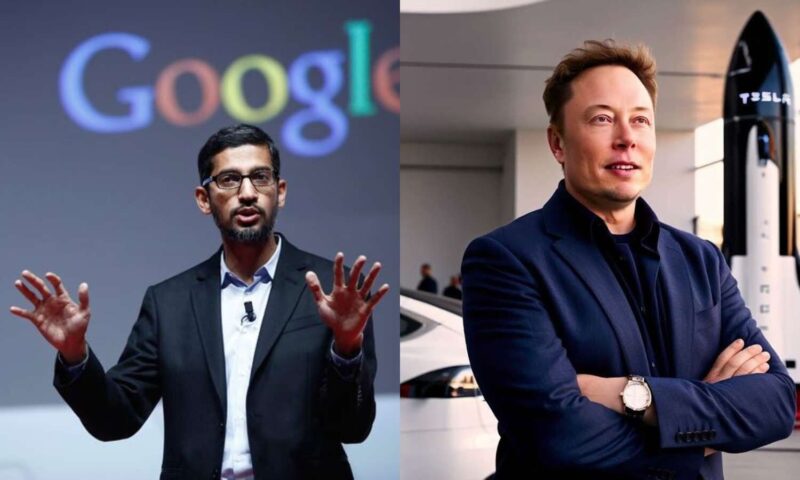
Tech fans and futurists were left stunned this week as Google CEO Sundar Pichai dropped a bombshell announcement on X. Google’s latest Willow quantum chip has reportedly achieved the first-ever verifiable quantum advantage, completing tasks 13,000 times faster than the best classical supercomputers. Yes, you read that right – 13,000 times faster. This is not just a tech upgrade; it could change the way we compute forever.
Pichai’s post quickly went viral, sparking a wave of excitement across the tech world. He described the Willow chip as a revolutionary leap that demonstrates quantum computing is moving from theory to reality. “Our Willow chip has achieved the first-ever verifiable quantum advantage,” Pichai wrote, adding that the performance far surpasses any classical algorithm on one of the world’s fastest supercomputers. The implications? Faster AI, more precise simulations, and problem-solving on scales we’ve never seen before.
The announcement didn’t go unnoticed by fellow tech giant Elon Musk. The Tesla and SpaceX CEO responded to Pichai’s post with a cryptic yet excited remark: “Congrats. Looks like quantum computing is becoming relevant.” Musk’s comment sparked widespread speculation. Is Musk hinting that quantum computing might soon play a role in Tesla’s AI systems, SpaceX calculations, or even Neuralink’s brain-computer interface? The tech world is buzzing.
So why does this matter? Quantum computing works differently from your standard laptop. Classical computers process data as bits – zeros and ones. Quantum computers use qubits, which can exist in multiple states simultaneously thanks to superposition. This allows them to solve certain types of problems exponentially faster than conventional computers. Achieving a verifiable quantum advantage means Google has demonstrated something no classical computer could match in a reasonable amount of time.
The Willow chip could revolutionize industries from drug discovery and materials science to logistics and artificial intelligence. Imagine AI algorithms running thousands of times faster, complex chemical simulations that were impossible before, or financial models calculated in mere seconds instead of months. Google’s breakthrough may finally bring these possibilities within reach.
Experts are calling this a milestone for humanity’s computing capabilities. While quantum computing is still in early stages, this achievement proves that the technology is no longer just a futuristic concept. Companies like IBM, Microsoft, and several startups have been racing to achieve similar breakthroughs, but Google’s claim of 13,000x faster performance has set a new benchmark in the industry.
Elon Musk’s reaction adds another layer of intrigue. The tech mogul has a history of pushing the limits, whether it’s in electric vehicles, space exploration, or AI. His acknowledgment that quantum computing is becoming relevant hints that even the most ambitious tech visionaries are paying close attention to this development. Some speculate that Musk might be exploring ways to integrate quantum computing into his ventures, potentially creating synergies that could redefine multiple industries.
While there’s still a long road ahead – scaling quantum computers, improving error correction, and integrating them with classical systems remain major challenges – this milestone proves that Google is leading the charge. The Willow chip is more than just a technological marvel; it’s a statement that quantum computing is no longer science fiction.
For the general public, the takeaway is clear: computing is entering a new era. The speed, efficiency, and problem-solving power of quantum computers could touch nearly every aspect of daily life in the next decade. From smarter AI assistants to breakthroughs in medicine, quantum computing is poised to change the way we live and work.
Google’s announcement and Musk’s reaction have created a perfect storm of excitement, speculation, and anticipation. Will quantum computing finally make its way into consumer technology? Could Musk be plotting something big using Google’s innovation? For now, the tech world is watching closely, waiting to see the next chapter in this high-stakes race to quantum supremacy.
One thing is certain: the era of quantum computing is officially here, and the pace of innovation is only going to accelerate. Google has set the stage, Elon Musk has taken notice, and the rest of the world is scrambling to catch up. The question now is, how soon will quantum technology touch your life?