
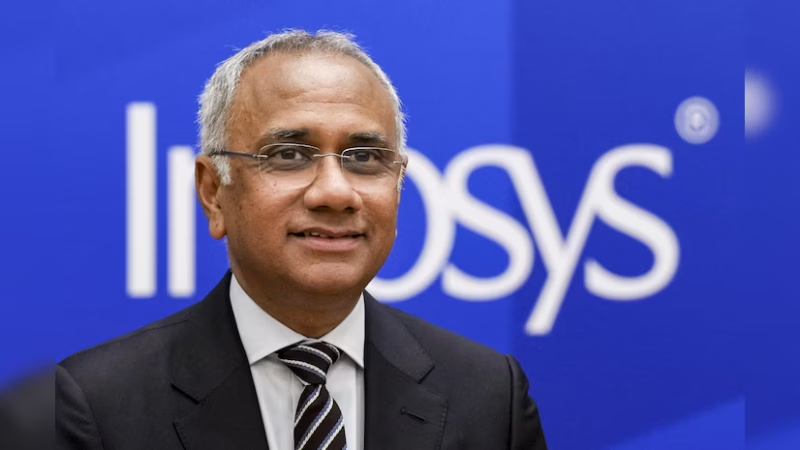
Salil Parekh Just Scored Big — Infosys Rewards CEO with Massive ₹51 Crore Stock Grant!
In a move that’s turning heads across the tech and corporate world, Infosys — India’s second-largest IT giant — has just approved Employee Stock Option Plans (ESOPs) worth a whopping ₹51 crore for its CEO and MD, Salil Parekh.
Yep, you read that right. ₹51 CRORE.
This massive stock-based reward comes as part of Infosys’ long-term incentive strategy, acknowledging Parekh’s leadership and impact on the company’s growth.
But what does this mean for the company, its shareholders, and the future of Infosys? Let’s break it down.
What Exactly Did Salil Parekh Get? Here’s the Breakdown
Infosys announced in a recent filing that the ESOP package includes multiple stock-based incentives, tied to both performance and sustainability (ESG) goals. These are not cash bonuses — they’re Restricted Stock Units (RSUs), which means Parekh will own more shares in the company if he meets certain targets.
The biggest chunk?
₹34.75 crore worth of RSUs as part of the Annual Performance Equity Grant under Infosys’ 2015 Stock Incentive Compensation Plan.
These shares are based on performance metrics and market value, so they act as a powerful motivator to push the company forward — and ensure the CEO has serious skin in the game.
Why Is Infosys Handing Out Such a Massive Stock Grant?
Let’s be honest — ₹51 crore isn’t handed out like candy. So why is Infosys rewarding Salil Parekh so generously?
Under Parekh’s leadership, Infosys has maintained a strong growth trajectory despite global tech headwinds.
He’s spearheaded major transformations in cloud, AI, and digital services — all critical for Infosys’ future.
His previous performance has won shareholder approval, and this ESOP grant is directly tied to those performance agreements.
It’s not just about the present — it’s about setting up Infosys for long-term success.
Will This Impact Infosys Stock? Here’s What Investors Should Watch
Big rewards like this can sometimes raise eyebrows among investors. But in this case, it’s part of a well-structured, performance-linked compensation plan. It doesn’t cost the company ₹51 crore upfront — it’s based on stock performance and future value.
For investors, this could be a bullish sign:
- Infosys is signaling strong confidence in its leadership.
- Parekh has more incentive than ever to deliver results.
- If he succeeds, shareholders benefit too.
This kind of alignment between executive rewards and company performance is exactly what the markets like to see.
The Bigger Picture: Infosys Bets on Leadership Stability
Infosys isn’t just throwing money around. These stock incentives are designed to retain top leadership in an incredibly competitive IT landscape. Tech companies around the world are struggling with churn and leadership transitions — Infosys is choosing stability.
And not just any stability — it’s betting big on Parekh, whose experience and performance have been crucial in navigating complex global markets and delivering consistent results.
What’s Next for Infosys and Its CEO?
With this stock grant locked in, all eyes will be on Parekh and Infosys’ next few quarters. Can they continue to grow amid global uncertainties in tech spending and enterprise transformation?
If he hits the right benchmarks, not only does Parekh stand to gain big — so do Infosys investors.
In Short: Infosys Is All In on Salil Parekh — And That Could Be a Smart Move
Infosys just made it clear: they trust Parekh to lead the next chapter of growth — and they’re willing to bet ₹51 crore on it.
Will he deliver?
If the past few years are any indication, he just might.
And if you’re an investor, this might be the perfect time to pay a little more attention to what Infosys is doing next.